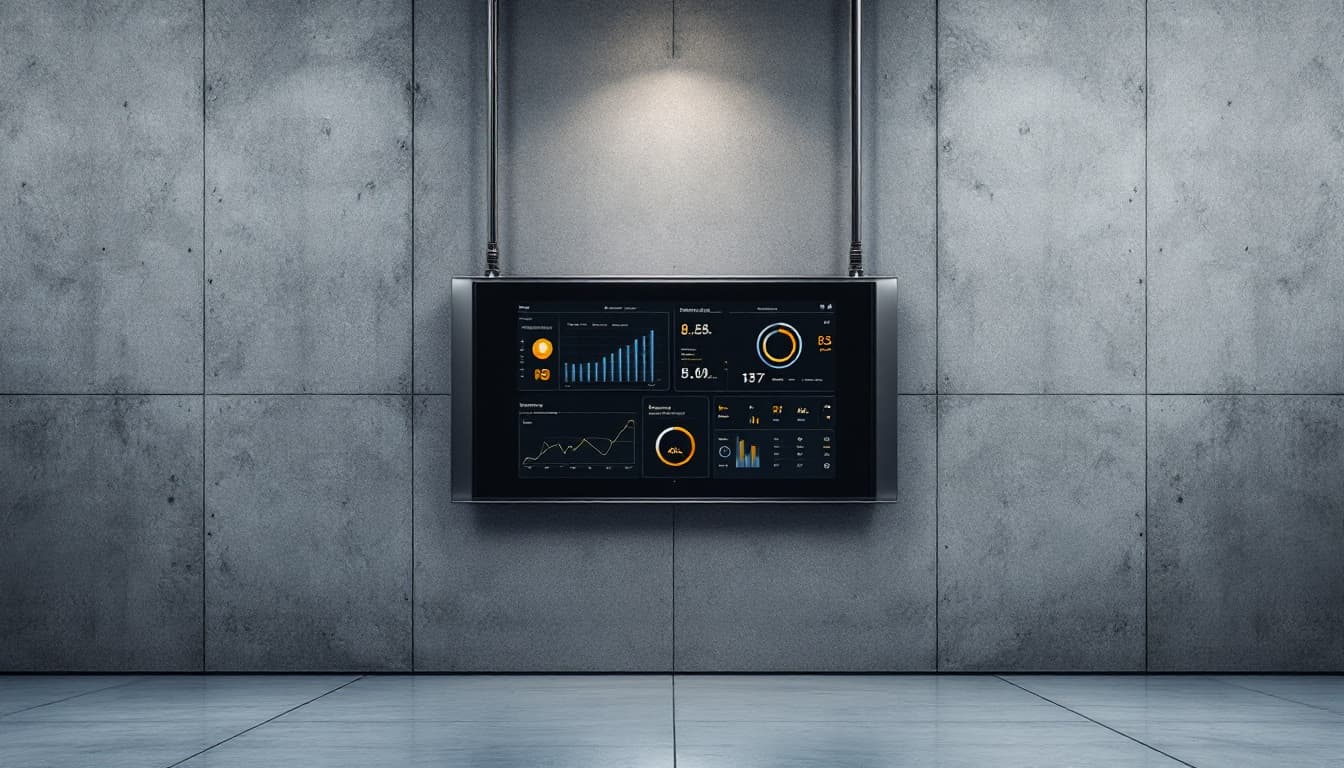
Stop burning money on manual facility management. A BAS building automation system is not a dashboarding toy. It's a networked warfare system that monitors HVAC, lighting, security, power distribution, and fire safety in real time—then kills waste automatically. Traditional facility teams run on reactive tickets and quarterly maintenance. A proper BAS deletes that operational debt.
Most enterprises treat their BAS like an afterthought—a locked controller box that only the vendor can access. That's financial suicide. Modern BAS architectures leverage open protocols like BACnet, Modbus TCP, and LonWorks to centralize control, eliminate vendor lock-in, and expose every sensor, actuator, and alarm via REST APIs. You're not managing a building. You're orchestrating a distributed real-time system that generates ROI through energy reduction and uptime guarantees.
Table of Contents
- ▹What Is a BAS Building Automation System?
- ▹Core Components of Modern BAS Architecture
- ▹Protocol Wars: BACnet vs Modbus vs LonWorks
- ▹HVAC Control: Delete the Energy Waste
- ▹Lighting and Power Distribution Integration
- ▹Security, Access Control, and Fire Safety Subsystems
- ▹Network Topologies: IP vs Serial vs Wireless
- ▹Cloud-Based BAS vs Edge-First Architectures
- ▹Performance Monitoring and Alarm Management
- ▹Open Source BAS Frameworks and Developer Tools
- ▹Real-World Implementation Strategy
- ▹FAQ
What Is a BAS Building Automation System?
A BAS building automation system is a networked platform that monitors and controls mechanical, electrical, and security infrastructure across commercial buildings. Controllers communicate with sensors (temperature, occupancy, CO2, power meters) and actuators (dampers, valves, relays) via industrial protocols. The system executes control sequences—PID loops, scheduling logic, fault detection—autonomously.
Core subsystems include:
- ▹HVAC: Chillers, boilers, air handlers, VAV boxes, exhaust fans
- ▹Lighting: Occupancy-based dimming, daylight harvesting, emergency circuits
- ▹Power: Load shedding, power factor correction, UPS monitoring
- ▹Security: Card readers, IP cameras, intrusion detection
- ▹Fire Safety: Smoke detectors, sprinkler systems, emergency notification
Unlike legacy proprietary systems, modern BAS platforms expose a unified API layer. You can query zone temperatures, override setpoints, pull energy consumption trends, or trigger alarms programmatically. This isn't facilities management—it's infrastructure as code.
For teams building enterprise SaaS solutions, BAS integration is critical for smart building applications. Think occupancy analytics for desk booking, predictive maintenance dashboards, or carbon tracking APIs. The BAS is your ground truth.
Core Components of Modern BAS Architecture
BAS systems operate on a three-tier architecture:
1. Field Layer (Sensors and Actuators)
Physical devices installed throughout the building. Examples:
- ▹Temperature sensors (RTD, thermistor, 4-20mA)
- ▹Occupancy detectors (PIR, ultrasonic, CO2)
- ▹Damper actuators (modulating 0-10V, on/off 24VAC)
- ▹Flow meters (ultrasonic, paddle wheel)
- ▹Power meters (Modbus RTU, BACnet MS/TP)
2. Control Layer (Controllers and Gateways)
Programmable controllers execute automation logic:
- ▹DDC Controllers (Direct Digital Control): Run PID loops, scheduling, alarming. Typically Tridium Niagara, Honeywell, or Siemens platforms.
- ▹PLCs (Programmable Logic Controllers): Industrial-grade for critical infrastructure like fire pumps or emergency generators.
- ▹Gateways: Protocol translators (BACnet/IP to Modbus TCP, LonWorks to KNX).
Controllers store historical trends locally and synchronize to the supervisory layer when network connectivity resumes. Edge-first design prevents total failure during WAN outages.
3. Supervisory Layer (HMI and SCADA)
Web-based dashboards for monitoring and overrides:
- ▹Real-time graphics (floor plans, equipment schematics)
- ▹Alarm management (prioritization, acknowledgment, escalation)
- ▹Trend analysis (energy consumption, temperature profiles, runtime hours)
- ▹Scheduling (holiday overrides, demand response events)
Modern systems use WebSocket or MQTT for live updates. No more polling every 5 seconds like a 2010 Java applet.
Protocol Wars: BACnet vs Modbus vs LonWorks
BACnet (Building Automation and Control Networks) is the dominant open standard. Defined by ASHRAE, it supports object-oriented device modeling. Every sensor, controller, and actuator is a BACnet object with standardized properties. BACnet/IP runs over Ethernet; BACnet MS/TP over RS-485.
Modbus is simpler but less feature-rich. Modbus TCP (Ethernet) and Modbus RTU (RS-485) are ubiquitous in industrial HVAC equipment. Low-level register mapping—no semantic device descriptions. Great for PLCs and power meters.
LonWorks was popular in the 1990s but has lost ground. Complex certification requirements and proprietary chipsets killed adoption. Still found in legacy elevator controls and some European installations.
Emerging protocols:
- ▹KNX: European standard for home and building automation. Twisted pair or RF.
- ▹MQTT: Lightweight pub/sub for IoT sensors. Common in cloud-hybrid BAS deployments.
- ▹Haystack: Semantic tagging framework for building data. Makes historical data queryable across heterogeneous systems.
Protocol selection rule: Use BACnet/IP for HVAC controllers. Use Modbus TCP for power meters and third-party equipment. Use MQTT for wireless sensors. Use Haystack tags for analytics pipelines.
HVAC Control: Delete the Energy Waste
HVAC accounts for 40-60% of commercial building energy. A properly tuned BAS building automation system can cut that by 15-30% through:
Demand-Controlled Ventilation (DCV)
CO2 sensors modulate outside air intake. When zones are unoccupied (CO2 < 600 ppm), dampers close to minimum code requirements. When occupied (CO2 > 800 ppm), dampers open. This reduces heating/cooling loads dramatically.
Optimal Start/Stop Algorithms
Controllers learn thermal mass characteristics. Instead of starting HVAC at 5:00 AM for an 8:00 AM occupancy target, the system calculates the minimum runtime needed—might be 6:30 AM. Saves 2.5 hours of energy daily.
Chiller Sequencing and Optimization
Run chillers at maximum efficiency (kW/ton). When cooling load drops, the BAS can stage chillers down, reset condenser water temperatures, or enable free cooling via economizers. Real-time efficiency tracking exposes underperforming equipment immediately.
VAV Box Tuning
Variable Air Volume boxes use PID loops to modulate airflow. Poorly tuned loops oscillate—dampers hunt, zones overheat, occupants complain. A BAS with self-tuning PID or model predictive control eliminates this.
Example control sequence in pseudocode:
if zone_temp > setpoint + deadband:
    cooling_valve.modulate(PID(zone_temp, setpoint))
    if cooling_valve > 90% and zone_temp still rising:
        trigger_alarm("Zone X overcooling failure")
elif zone_temp < setpoint - deadband:
    heating_valve.modulate(PID(zone_temp, setpoint))
For teams designing AI agent architectures, HVAC optimization is a prime candidate for reinforcement learning. Train agents to minimize energy cost while maintaining comfort constraints. The BAS provides the state observations and action space.
Lighting and Power Distribution Integration
Occupancy-Based Lighting
PIR or ultrasonic sensors detect presence. Lights dim to 30% when zones are unoccupied, or turn off entirely after a timeout. Emergency egress lighting stays active per code. Daylight harvesting uses photocells to dim fixtures when natural light is sufficient.
Emergency Power Coordination
When utility power fails, the BAS coordinates generator startup, automatic transfer switch (ATS) operation, and load shedding. Non-critical loads (conference room HVAC, decorative lighting) are dropped. Critical loads (data center CRAC units, fire pumps, emergency lighting) remain powered.
Power Metering and Demand Response
Modbus power meters expose real-time kW, kVAR, power factor, and harmonic distortion. When demand peaks approach utility penalty thresholds, the BAS sheds non-essential loads or shifts HVAC setpoints by 2°F. This avoids demand charges that can exceed $20/kW/month in some regions.
Sample Modbus TCP query (Python with pymodbus):
from pymodbus.client import ModbusTcpClient

client = ModbusTcpClient('192.168.1.100')
result = client.read_holding_registers(address=0x0000, count=10, slave=1)
kw_demand = result.registers[0] / 10.0  # Scale factor from meter docs
print(f"Current demand: {kw_demand} kW")
Security, Access Control, and Fire Safety Subsystems
Access Control Integration
Card readers, biometric scanners, and door strikes interface via Wiegand, RS-485, or TCP/IP. The BAS logs entry/exit events, correlates them with HVAC schedules (if a badge swipes at 6:00 AM, pre-condition that zone), and triggers alarms for forced entry.
Video Surveillance
IP cameras (ONVIF protocol) stream to Network Video Recorders (NVRs). The BAS can trigger camera presets when motion sensors activate in secure areas. Integration is typically one-way: BAS sends events to the VMS (Video Management System), but doesn't process video streams directly.
Fire Alarm Systems
Addressable fire panels communicate via BACnet or proprietary protocols (Simplex, Notifier). When a smoke detector activates:
- ▹BAS shuts down air handlers to prevent smoke spread
- ▹Elevator recall to ground floor
- ▹Unlock emergency exit doors
- ▹Activate emergency notification (speakers, strobes)
- ▹Notify monitoring station via IP or cellular
This coordination is life-safety critical. Delays or failures result in lawsuits and code violations.
For compliance-heavy industries, understanding biometrics identity verification systems and their integration points is non-negotiable. Your BAS must audit access attempts, badge credentialing, and video retention per SOC 2 or ISO 27001 requirements.
Network Topologies: IP vs Serial vs Wireless
Ethernet/IP (Most Common)
BACnet/IP or Modbus TCP over Cat6. Controllers connect to managed switches with VLANs isolating OT (Operational Technology) from IT networks. Advantages: high bandwidth, easy troubleshooting, standard cabling. Downside: every controller needs a switch port.
RS-485 Serial (Legacy but Reliable)
BACnet MS/TP or Modbus RTU. Daisy-chain topology with termination resistors. Max 32 devices per segment (extendable with repeaters). Advantages: low cost, deterministic timing, survives EMI. Downside: slow (9600-115200 baud), difficult troubleshooting.
Wireless (Emerging)
Wi-Fi, Zigbee, or LoRaWAN for sensors. Great for retrofit installations where cabling is prohibitive. Challenges: battery life, RF interference, security (WPA2-Enterprise + certificate pinning required). Use wireless for non-critical sensors only—never actuators.
Hybrid Approach
Core HVAC controllers on Ethernet. Power meters on RS-485. Occupancy sensors on Zigbee. Gateways aggregate serial and wireless devices to IP.
Network segmentation is non-negotiable. Put BAS on a dedicated VLAN with firewall rules blocking lateral movement. Never expose BACnet/IP to the public internet—attackers scan for port 47808 constantly.
Cloud-Based BAS vs Edge-First Architectures
Cloud BAS Platforms
Vendors like BuildingOS, 75F, or J2 Innovations push for cloud-centric models. Controllers stream data to AWS/Azure. Analytics, machine learning, and reporting run in the cloud. Remote access from anywhere. Firmware updates via OTA.
Advantages:
- ▹Infinite storage for historical trends
- ▹Advanced analytics (fault detection, energy forecasting)
- ▹Multi-site portfolio management
- ▹No on-prem servers to maintain
Disadvantages:
- ▹WAN outage = total loss of control
- ▹Latency for critical PID loops (unacceptable)
- ▹Subscription lock-in (often $2-5 per point per month)
- ▹Data sovereignty concerns for European or regulated industries
Edge-First BAS (Recommended)
Controllers execute all control logic locally. Cloud is used only for dashboards, historical aggregation, and reporting. If internet fails, HVAC keeps running. BACnet traffic stays on-premises.
Hybrid model: Use edge controllers for real-time control. Stream telemetry to cloud for enterprise performance management software integration or predictive maintenance dashboards.
Example edge + cloud architecture:
[Field Devices] <--BACnet MS/TP--> [DDC Controller]
                                          |
                                    BACnet/IP
                                          |
                              [Edge Gateway (Niagara)]
                                    |         |
                              Local HMI   MQTT Broker
                                              |
                                          [AWS IoT Core]
                                              |
                                    [S3 + Athena Analytics]
Performance Monitoring and Alarm Management
Trend Logging
Controllers log sensor values at configurable intervals (1 minute, 5 minutes, hourly). Local storage is typically 30-90 days. After that, trends sync to a historian database (InfluxDB, Timescale, or Postgres with TimescaleDB extension).
Query example (SQL on TimescaleDB):
SELECT time_bucket('15 minutes', timestamp) AS bucket,
       AVG(zone_temp) AS avg_temp,
       MAX(cooling_valve_position) AS max_valve
FROM hvac_trends
WHERE zone_id = 'VAV-101'
  AND timestamp > NOW() - INTERVAL '7 days'
GROUP BY bucket
ORDER BY bucket;
Alarm Prioritization
Not all alarms are equal. Classify by severity:
- ▹Critical: Fire alarm, chiller failure, freezestat trip → page on-call immediately
- ▹High: Zone temp deviation > 5°F, power outage → alert within 15 minutes
- ▹Medium: Filter pressure high, runtime hours exceeded → daily summary email
- ▹Low: Informational events → log only
Alarms must include context: affected equipment, current value, setpoint, timestamp, recommended action. "Zone Temp High" is useless. "Zone 4-102 temp 78°F exceeds setpoint 72°F by > 5°F for 30 min. Check cooling valve position and airflow." is actionable.
Alarm fatigue kills BAS effectiveness. Tune dead bands, suppress nuisance alarms, and implement auto-acknowledgment for transient events.
Open Source BAS Frameworks and Developer Tools
oBIX (Open Building Information Exchange)
XML/JSON REST API for BAS data. Define points, histories, alarms, and schedules as URIs. Query current values via HTTP GET. Override via HTTP POST. Legacy but still functional.
Haystack
Semantic tagging standard. Tag points with metadata (site, equip, hvac, ahu, discharge, air, temp, sensor). Enables cross-vendor analytics and portability. Haystack 4.0 adds RDF/JSON-LD for linked data integration.
BACpypes (Python)
Pure Python BACnet stack. Build custom BACnet clients, servers, or gateways. Great for prototyping or integrating BAS data into vector databases for RAG systems.
Example BACnet read (Python):
from bacpypes.app import BIPSimpleApplication
from bacpypes.object import AnalogValueObject
from bacpypes.core import run

app = BIPSimpleApplication('192.168.1.50/24')
request = ReadPropertyRequest(
    objectIdentifier=('analogValue', 1),
    propertyIdentifier='presentValue'
)
response = app.request(request)
print(f"Current value: {response}")
Node-RED
Visual programming for BAS workflows. Connect BACnet nodes, MQTT brokers, and HTTP endpoints via drag-and-drop. Great for rapid prototyping or non-critical automation sequences.
Grafana + InfluxDB
Visualize BAS trends. InfluxDB stores time-series data. Grafana dashboards query and plot. Add alerting rules for anomaly detection.
Real-World Implementation Strategy
Phase 1: Audit Existing Infrastructure
Document all HVAC equipment, sensors, controllers, and protocols. Identify proprietary lock-ins (vendor-specific protocols, encrypted configurations). Map network topology. Measure baseline energy consumption.
Phase 2: Protocol Standardization
Replace or gateway proprietary controllers to BACnet/IP or Modbus TCP. This is painful but necessary. Budget $500-1500 per controller replacement. Gateways are cheaper ($200-800) but add latency.
Phase 3: Network Segmentation
Deploy managed switches with VLANs. Isolate BAS traffic from corporate IT. Implement firewall rules. Disable unused switch ports. Enable port security (MAC address binding).
Phase 4: Supervisory Layer Deployment
Install HMI/SCADA platform (Niagara, Ignition, or open source like OpenHAB). Configure graphics, alarms, trends, and schedules. Train facility staff on dashboards and override procedures.
Phase 5: Optimization and Commissioning
Tune PID loops. Calibrate sensors. Verify control sequences match design intent. Run functional tests (simulate fire alarm, test demand response, verify optimal start).
Phase 6: Continuous Monitoring
Set up automated reporting. Track KPIs: energy per square foot, HVAC runtime hours, alarm frequency, occupant comfort complaints. Iterate on control sequences quarterly.
For teams evaluating database optimization tools, BAS historians (InfluxDB, TimescaleDB) benefit enormously from indexing strategies and retention policies. A 1000-point BAS generates 1.44 million records daily at 1-minute intervals. Partition tables by month. Index on timestamp and point_id.
FAQ
What is the difference between a BAS and a BMS?+
BAS (Building Automation System) and BMS (Building Management System) are functionally identical. BAS is more common in North America. BMS is preferred in Europe and UK. Both refer to centralized control of HVAC, lighting, and security. Some vendors use BMS to imply broader scope (including work order management or space utilization), but this is marketing, not technical distinction.
Can I integrate a BAS with a cloud-based transportation management system?+
Not directly. BAS controls building infrastructure (HVAC, lighting, access). A cloud-based transportation management system handles logistics, routing, and fleet coordination. However, you could integrate occupancy data from BAS into a TMS for dock door scheduling or warehouse climate control based on shipment arrival predictions. Use MQTT or REST APIs as the integration layer.
What security measures prevent BAS network intrusions?+
VLANs isolate BAS traffic. Firewalls block unauthorized IP ranges. Disable BACnet broadcast forwarding. Use WPA2-Enterprise for wireless sensors. Implement certificate-based authentication for supervisory access. Change default controller passwords immediately (yes, people still ship with "admin/admin"). Conduct quarterly penetration tests. Monitor for rogue BACnet devices using Wireshark or BACnet scanner tools. Never expose BACnet/IP to public internet—use VPN with MFA.